
Preparing New Call Center Agents for Live Calls

iNStep helped organize a blended onboarding experience and designed key components that moved new call center agents from foundational learning through guided system practice, realistic call rehearsal, and structured shadowing before they began supporting medical professionals on live calls.

‍

Client

Medical credentialing organization

Learning Format

Asynchronous eLearning, instructor-led training, guided practice, and structured shadowing

Scope

Six curriculum topics serving two call center roles

Leader Enablement

Training Development

Delivery Management

The Need

New call center agents needed to help medical professionals obtain and maintain credentials across several specialties. Answering customer questions required agents to work within four technology systems, navigate the organization’s website, and locate supporting information within an evolving digital asset management system.

Some knowledge applied to every agent, but the two major call center roles handled different types of questions and followed different paths through the systems and supporting resources.

The organization needed a more cohesive onboarding experience that would help agents understand where information lived, use the available tools together, and prepare for the judgment required during live calls. Agents also needed to help frustrated callers find reliable information for themselves so they could better understand credentialing and recertification requirements.

“

Nicole provides an excellent balance of expertise and leadership alongside her capability to work as a member of a broader team.

‍

Our Solution

iNStep helped shape a blended learning experience that moved agents from foundational knowledge to guided application, realistic call practice, shadowing, and live work.

We organized each topic so learners began with asynchronous eLearning and then expanded on the content during instructor-led sessions through demonstrations, scavenger hunts, discussions, and hands-on practice. Shared instruction established a common foundation, while role-specific activities prepared agents for the systems, resources, and call situations they would encounter within their assigned call center.

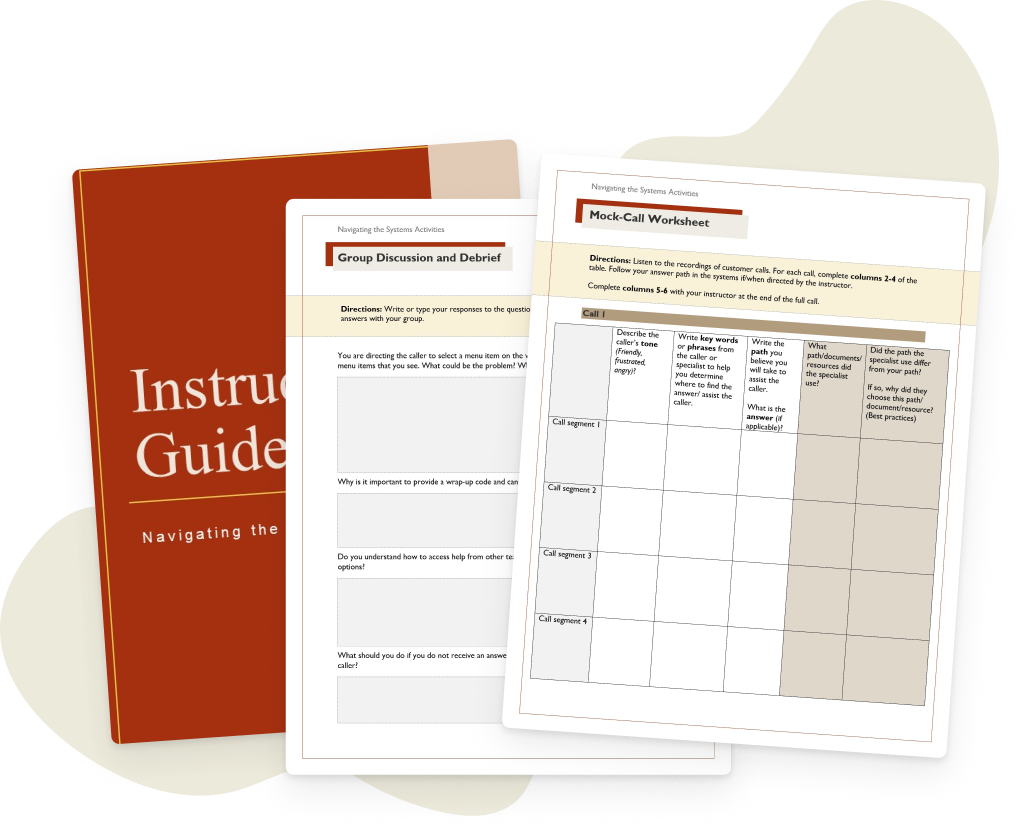
We designed three complete instructor-led courses and contributed job aids, learner materials, classroom activities, and assessment questions across the broader six-topic curriculum. We also created a shared instructor-guide template and visual standards for printed materials and reviewed and tested supporting eLearning.

Our Process

Inside Our Approach

Building a progression toward live calls

We began with an existing curriculum roadmap that outlined the required topics, learning formats, deliverables, and estimated seat times. From there, we helped organize the content into a deliberate progression toward live calls.

Agents first encountered new information through eLearning, then explored it with an instructor, practiced within the systems, and discussed what they discovered. Structured shadowing connected the classroom experience to real calls before agents began handling calls themselves.

We also developed questions for pre- and post-training assessments, giving the client a consistent way to examine what learners understood at the beginning and end of the program.

Turning system knowledge into integrated practice

Knowing how each system worked independently was not enough. Agents needed practice deciding where to look, which path to follow, and how to combine information from multiple sources while assisting a caller.

We designed scavenger hunts that guided learners through the website, digital file system, and internal systems. We also created learner handouts that prompted agents to record what they found, complete activities, and make connections across the available resources.

Because the two call center roles followed different routes within the same tools, we structured activities to begin with shared instruction and then direct learners toward the screens, resources, and scenarios relevant to their work.

Using real calls as guided rehearsal

The final instructor-led practice prepared agents to apply their knowledge in situations that reflected the pace and uncertainty of live work.

We designed a call-rehearsal activity that guided instructors to play recorded calls in segments. At planned pause points, learners documented what they would do next and completed the corresponding action within the system. The instructor then continued the call and led a discussion about the trainer’s decision.

This structure slowed the experience down enough for learners to consider the caller’s tone, urgency, and needs, ask questions, and understand why one response might be more appropriate than another. Learners then carried those observations directly into structured shadowing.

Maintaining continuity and quality through change

As the project evolved, we took on additional responsibility for instructional design guidance, coordination, quality assurance, and functional testing.

We collaborated closely with the other instructional designers to align activities and design decisions across the curriculum. To support consistency across six instructor guides, we created a shared Word template and style sheet with standard terminology and visual cues. These elements helped instructors quickly recognize pacing notes, activities, discussion points, and areas of emphasis.

We also reviewed developing eLearning, tested its functionality, and identified gaps or inconsistencies.

When the project manager built the project structure in Asana, she consulted with us about how to represent the team’s current assignments and progress.

Impact

The completed program gave new agents a structured path from introductory content to integrated system practice, realistic call rehearsal, and supervised exposure to live work.

The client responded enthusiastically during both the pilot and final launch. Following the rollout, the organization asked to explore additional training built around the same blended approach.

The instructor-guide template, activity formats, and job-aid standards we created also gave the training team a consistent foundation to use across the curriculum.