
iNStep started with what already existed: the old course, its storyboard, and the wiki pages employees leaned on for guidance. None of it could confirm whether the documented process matched how people worked day to day, so iNStep ran discovery interviews with contributors across sales, operations, and customer service. Those interviews found that people could be following the same sales process on paper and still executing it inconsistently, because their sense of the process itself varied.
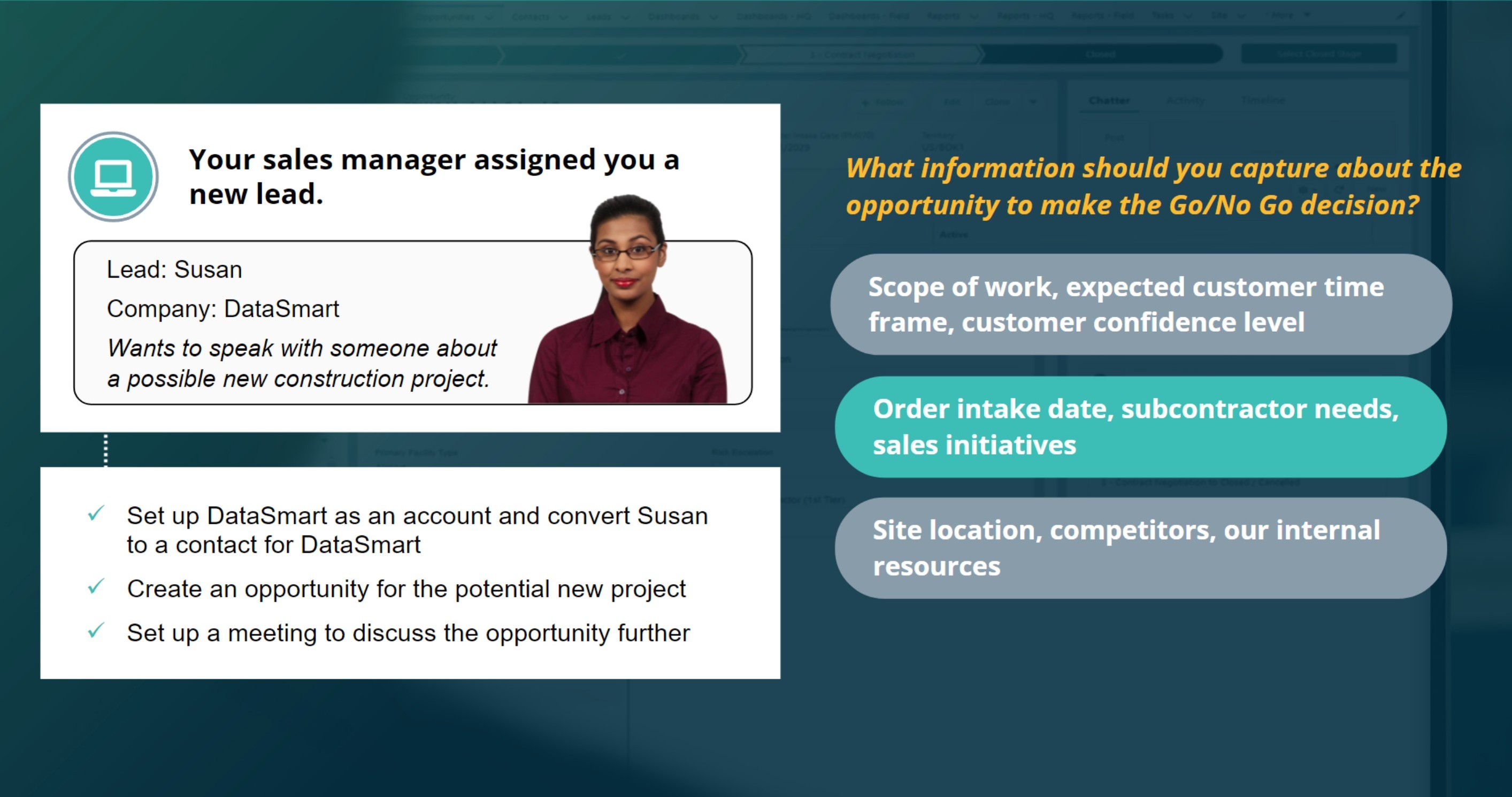
An interaction might be a LinkedIn message, a conversation at a conference, or a phone call, and employees didn't agree on when one was worth documenting. Some waited to log an interaction until a lead became a prospect, reasoning that anything earlier wasn't relevant yet, and since people didn't agree on when that shift happened, some interactions never made it into the system at all. Those gaps showed downstream too, in the incomplete sales records a client services or operations manager inherited once a deal closed.
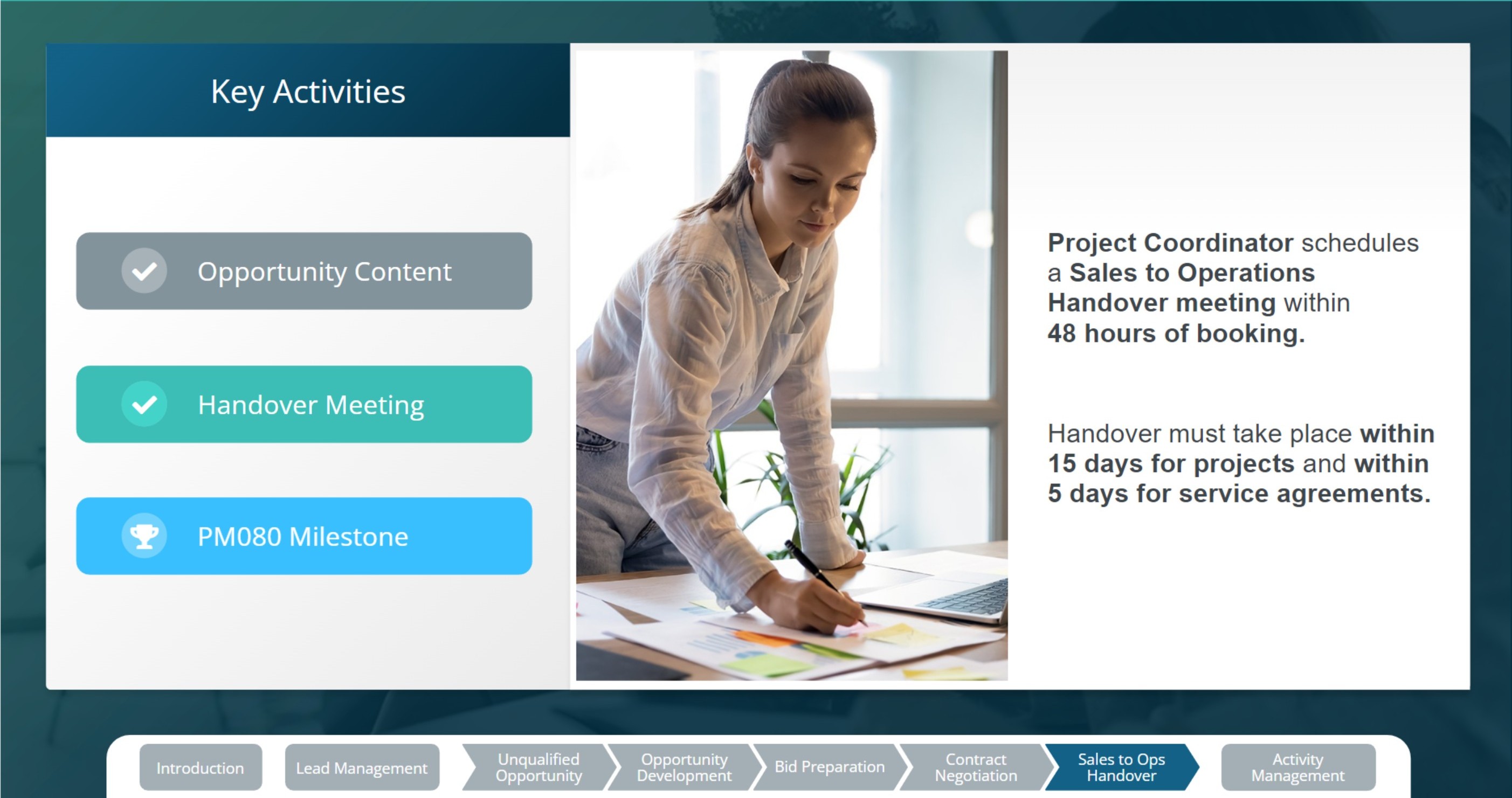
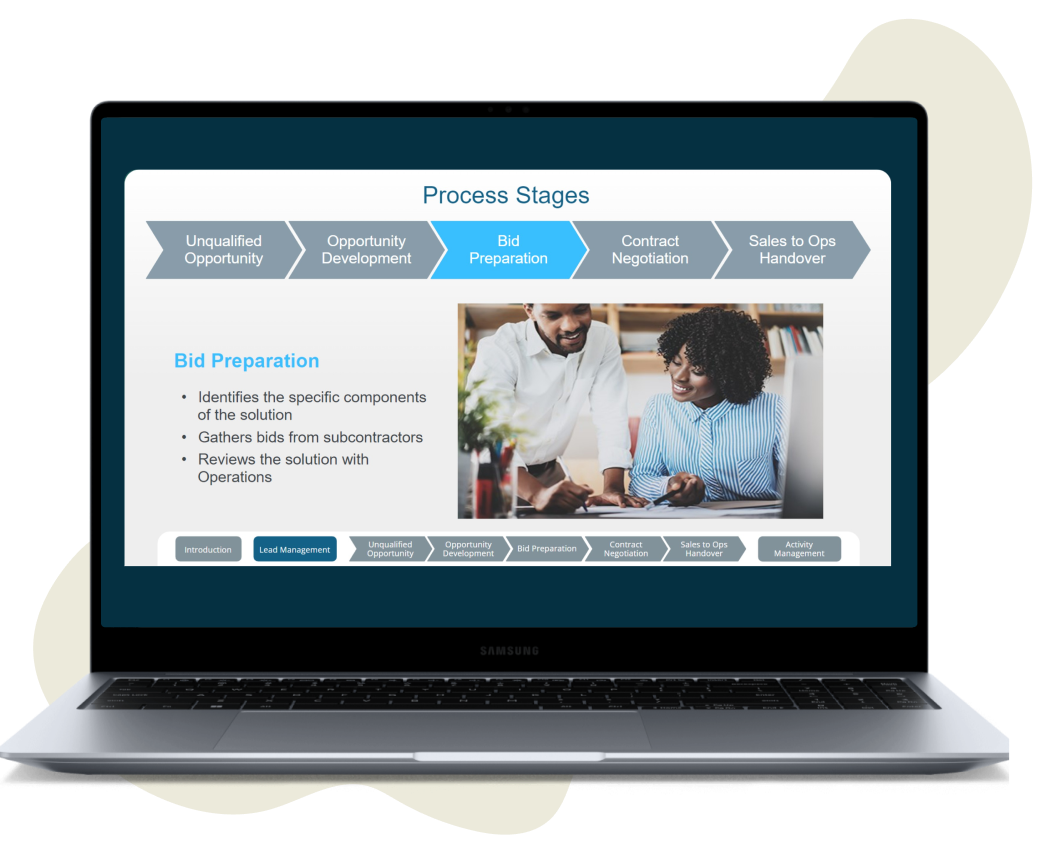
The old sales process didn't formally account for lead management or activity management. Discovery showed that was exactly where the largest gaps lived: without a defined stage for either, work happened inconsistently and went largely undocumented. iNStep added lead management and activity management as their own stages of the sales process, giving every role a defined place to capture interactions during the sale and after it. The engagement grew from updating a course into updating the sales process itself.
iNStep then brought the SMEs back together to work through the findings as a group, a conversation that surfaced process gaps several stakeholders hadn't known were there. Out of that work came a shared definition for every stage of the process: the key activities needed to move a deal forward, the basic terms everyone needed to agree on, and clear guidance on which interactions needed to be documented and which didn't.